The following content is cross-posted from California Health Care Foundation published on November 4, 2022.
Authors: Colin Planalp and Lacey Hartman, SHADAC
Employer-sponsored insurance declined significantly; Medi-Cal and individual market coverage held steady
During 2021, the second calendar year of the COVID-19 pandemic, California’s health insurance landscape remained relatively stable. This article focuses exclusively on Californians under age 65, which is the threshold for age-based Medicare coverage, and the coverage rates highlighted below include children except where otherwise specified (i.e., “nonelderly adults”). Based on the 2021 California Health Interview Survey (CHIS), the percentage of Californians under age 65 without health insurance, 7.4% in 2021, was not significantly different from the prior year. There also were no statistically significant changes across demographic groups, including income, age, geography, and race and ethnicity.
Also, the rate of Californians with individual market coverage, 5.9% in 2021, was statistically unchanged from 2020. While the rate of Californians with Medi-Cal coverage (California’s Medicaid program), 26.4% in 2021, appears higher than the 24.8% of 2020, the difference is not statistically significant. That finding contrasts with records from the California Department of Health Care Services, which reported that Medi-Cal enrollment increased by 7.3% (893,552 enrollees) in 2021 for people under age 65, growing from 12,244,085 in December 2020 to 13,137,637 in December 2021.1
There are multiple potential explanations why survey data on Medi-Cal enrollment may differ from Medi-Cal’s records. Research shows that surveys tend to undercount people enrolled in state Medicaid programs, in part due to people’s confusion over program names and whether they are still enrolled in Medicaid. This second issue, of people being unaware they are still enrolled, may have been exacerbated during the pandemic. A temporary policy, termed “continuous coverage,” prevented enrollees from being disenrolled from Medicaid during the public health emergency, as health coverage has been vital to preserving access to health care. This policy may have resulted in some Californians retaining Medi-Cal coverage they assumed had expired.
Health Insurance in California by Coverage Type, 2013–21
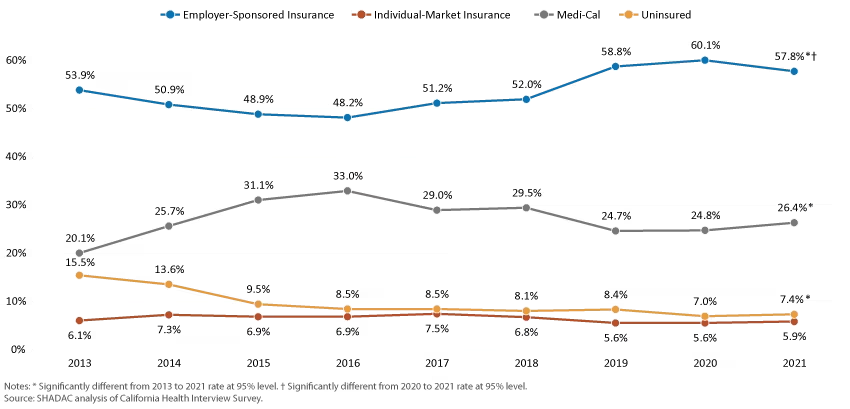
At the same time, the rate of Californians with employer-sponsored insurance (ESI) declined significantly, from 60.1% in 2020 to 57.8% in 2021. The losses in ESI appear to have been offset by increases in Medi-Cal coverage for some key groups. For instance, while ESI rates declined significantly for nonelderly adults (age 18–64), people with moderate incomes (139%–400% of federal poverty level) and Latinx people experienced statistically significant increases in Medi-Cal coverage rates.2
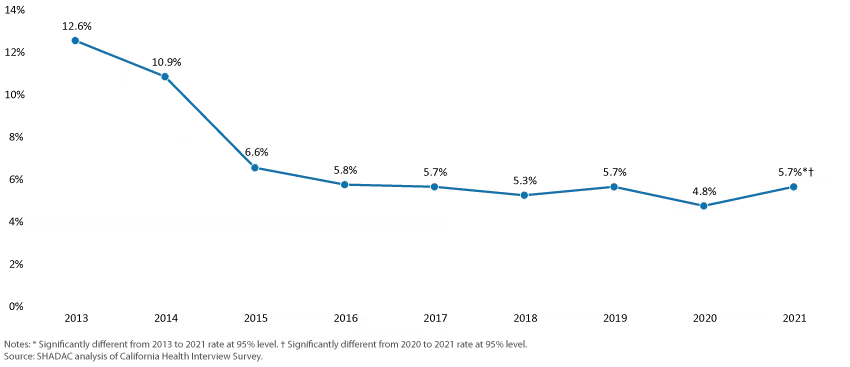
Although the percentage of Californians without health insurance at a given time was unchanged in 2021, the rate of Californians experiencing long-term uninsurance (for a year or more) rose from 4.8% in 2020 to 5.7% in 2021, a statistically significant increase.
Long-Term Uninsurance Rate in California, 2013–21