

Basics Blog
SHADAC has created a series of “Basics Blogs” to familiarize readers with common terms, concepts, and topics that are frequently covered. See all Basics Blogs here.
It has been more than a decade since the CDC declared a national opioid epidemic, and thousands still die in the U.S. from drug overdoses every year. Over 1.1 million people have died due to overdoses since the year 2000 — more than double the number of American military personnel killed in World War I and World War II combined.[1],[2]
In addition to this substantial loss of life, millions more are impacted by the opioid crisis through friends, parents, children, and other family members, along with financial and economic impacts:
- Nearly one-third of U.S. adults know someone who has died of an overdose.[3]
- 2.2 million children and adolescents have a parent with opioid use disorder (OUD) or OUD themselves.[4]
- The estimated economic cost of OUD and fatal overdoses amounted to $1,021 billion according to the CDC in one year (2017) alone.[5]
While the opioid epidemic is a complex phenomenon with many factors influencing its trajectory and dynamics, it’s important to understand the basics of these drugs. The chemistry of opioids and how they work in the body are foundational to the evolution of this crisis.
So, what are opioids, exactly? How do opioids work? And what are common opioids?
SHADAC will answer those questions and more in this Basics Blog. Learning more about types of opioids and the differences between them can help in understanding their impact, why these drugs are so addictive, and how the opioid crisis has evolved over time.
What Are Opioids? General Opioid Definition
Opioids are a class of chemical compounds that interact with opioid receptors found all over the body, including in the gastrointestinal (GI) tract, respiratory and cardiovascular systems (i.e., heart and lungs), and brain.[6] There are many drugs that fall into the category of ‘opioids’ including both prescription opioids (e.g., oxycodone, hydrocodone) and illicit or illegal opioids (e.g., heroin).
When prescribed, opioids are mostly used as powerful pain relievers. For example, a health care provider might prescribe an opioid after a patient has major surgery, or to treat chronic pain. Additionally, opioids can activate the “pleasure centers” of the brain, which can also help provide pain relief, increase feelings of pleasure, and, sometimes, lead to a euphoric ‘high’.[7]
How Do Opioids Work?
As we mentioned earlier, opioid receptors are naturally found all over the body. These receptors interact with the body’s own naturally occurring opioid compounds, called endorphins. The name “endorphin” is itself derived from opioids, a portmanteau of “endogenous” (meaning they are produced by the human body itself) and “morphine,” which was the first opioid compound to be isolated by scientists. These endorphins, or endogenous opioids, are used by the body to naturally manage a number of body functions and processes, including:
- Helping to regulate stress, hormones, immune system
- Controlling pain
- Regulating the digestive system
- Modulating emotions, feelings of pleasure
Opioid drugs, unlike endogenous opioids, aren’t found naturally in the human body, but they still interact with and activate our opioid receptors. This allows us to use opioid drugs as prescription pain relievers and for other medical purposes, but they can also carry serious risks.
Because opioid drugs interact and interfere with the body’s natural endorphins and receptors, using them in for extended periods of time can result in “chemical dependence,” when the use of external opioids begins to interfere with the body’s production and use of its own endorphins. And because opioid drugs act on receptors in the pleasure centers of the brain, they can trigger addiction and the negative cycles of behavior that can accompany it. These are risks associated with both illicit opioids and legal, prescribed opioids.
Opioid drugs’ ability to mimic our natural endorphins and interact with our body and brain is what makes them so powerful for medical purposes, as well as a powerfully addictive set of substances. And because opioids exist as a broad family of related drugs, it is difficult to maintain tight control over them — as governments attempt to enhance control over one type of opioid, illicit drug traffickers may switch to alternative opioids; and as certain types of opioids become harder to obtain, people who are addicted to one type of opioid may switch to another that is easier to get.
This combination is a large part of what led to the opioid crisis and its evolving dynamics, especially as use of prescription opioid painkillers (and, simultaneously, growing drug deaths) increased in the mid- to late-1990s.
Figure 1. Timeline of the Evolving Opioid Crisis
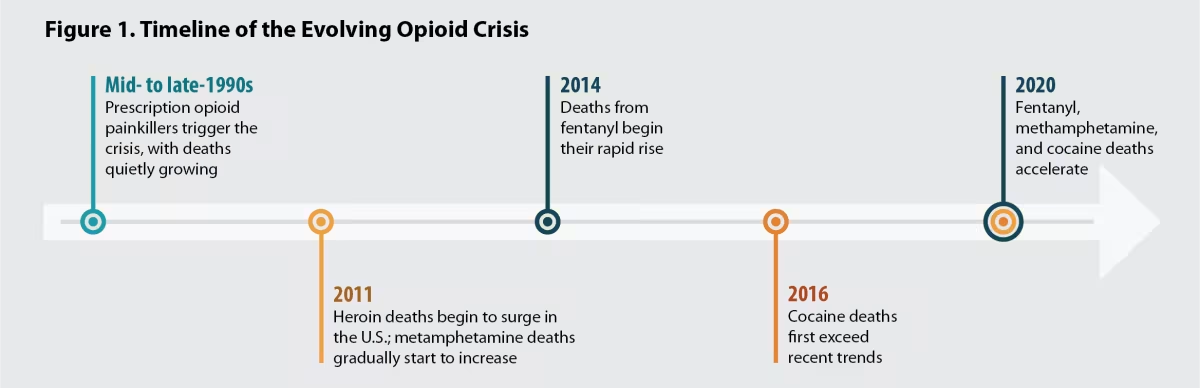
After increased regulation of prescription opioids (partly an attempt to halt the newly declared opioid epidemic), they became harder to access, which was likely a factor in the increase in heroin and other illicit opioid drug use and deaths in the years following.
Learn more about the history of the opioid epidemic on SHADAC’s opioid epidemic resource page.
Types of Opioids: Natural, Semi-Synthetic, and Synthetic
Now that we’ve gone over what opioids are and how they work in a general sense, let’s look more specifically at examples of common opioids and the differences between them.
Is morphine an opioid? Is heroin an opioid? Is fentanyl an opioid? You’ll find out in this section (hint: all three of these drugs are opioids, but they aren’t all the same category of opioid—keep reading to learn the details).
Natural Opioids
Natural opioids are substances derived directly from the opium poppy, typically from the resin of the plant’s seed pod. The opium poppy produces these opioids naturally, hence the name. Natural opioids are also referred to as opiates.
Natural opioids from the opium poppy can be extracted for use in treating pain relief, but they also have a centuries-long history of human use and abuse. They even played critical roles in world history, such as triggering the First Opium War between Great Britain and China, followed by a series of subsequent conflicts.
Some examples of natural opioids include:
- Morphine
- Codeine
- Opium
- Thebaine
Semi-Synthetic Opioids
Semi-synthetic opioids are made by chemically processing natural opioids, modifying them into new opioid compounds. For pharmaceutical-grade opioids, semi-synthetic opioid painkillers may be made in modern laboratory and manufacturing facilities. However, illicitly trafficked semi-synthetic opioids, such as heroin, can also be made using relatively crude and unsanitary conditions.
Examples of semi-synthetic opioids include:
- Heroin (also known by the chemical name diacetylmorphine)
- Oxycodone (sometimes known by its brand name OxyContin)
- Hydrocodone (sometimes known by its brand name Vicodin)
- Hydromorphone (sometimes known by its brand name Dilaudid)
So, while these drugs are man-made and don’t occur in nature, natural opioids from the opium poppy serve as the “raw material” that pharmaceutical manufacturers (or drug traffickers) use to make semi-synthetic opioids.
Synthetic Opioids
Synthetic opioids are entirely man-made. Unlike man-made semi-synthetic opioids that are derived from compounds extracted from the opium poppy, synthetic opioids are not made from products of the opium poppy. Instead, synthetic opioids are made from other precursor chemicals that do not depend on the opium poppy.
Synthetic opioid compounds are made to mimic natural opioids (as well as endorphins), allowing them to activate opioid receptors. Examples of synthetic opioids include:
- Fentanyl
- Methadone
- Tramadol
- Nitazenes
Most synthetic opioids are much more potent than natural or semi-synthetic opioids. For example, fentanyl can be 50 times more potent than heroin (a semi-synthetic opioid), and 100 times more potent than morphine (a natural opioid). This means that a very small amount of fentanyl can be lethal. For instance, a dose of fentanyl the size of a grain of rice would be enough to kill several people via a deadly overdose.[8]
The distinction between synthetic opioids and natural and semi-synthetic opioids is also important because being unbound from challenges of growing opium poppies can make synthetic opioids more appealing to drug traffickers than natural and semi-synthetic opioids.
The international community has developed treaties that prohibit the production and use of opioids for non-medical purposes, and it places tight limitations on the growth of opium poppy for pharmaceutical opioids. Alongside those restrictions, governments around the world engage in law enforcement efforts to control illicit opioid trafficking, such as systematic eradication of illegal opium poppy crops, which can interfere in the business model of drug traffickers and increase drug prices.
Because of this potency and the overall cheaper manufacturing costs compared to natural and semi-synthetic opioids, synthetic opioids like fentanyl are becoming more and more widespread.[9]
Many don’t even know they are consuming synthetic opioids like fentanyl, since they often mixed with other drugs in order to increase their potency. One Drug Enforcement Administration (DEA) analysis found that, “42% of pills tested for fentanyl contained at least 2 mg of fentanyl, considered a potentially lethal dose.”[8]
Early in the fentanyl phase of the opioid crisis, fentanyl would be sold by drug traffickers as heroin, despite being more potent, likely contributing to overdoses. And, in more recent years, fentanyl has been increasingly found by law enforcement agencies in illicitly trafficked counterfeit pharmaceutical pills, even in counterfeits of medications that should not contain any form of opioid, such as Adderall or Valium.
SHADAC’s own work has seen similar information on the ubiquity of fentanyl emerge. Our analysis of 2022 vital statistics data found that over three-quarters (76.4%) of cocaine overdose deaths and almost two-thirds of prescription opioid (59.0%) and methamphetamine (64.7%) overdose deaths also involved fentanyl or other synthetic opioids.[2]
Figure 2. Overlap of Fentanyl with Cocaine, Prescription Opioid, and Methamphetamine Overdose Deaths, 2022
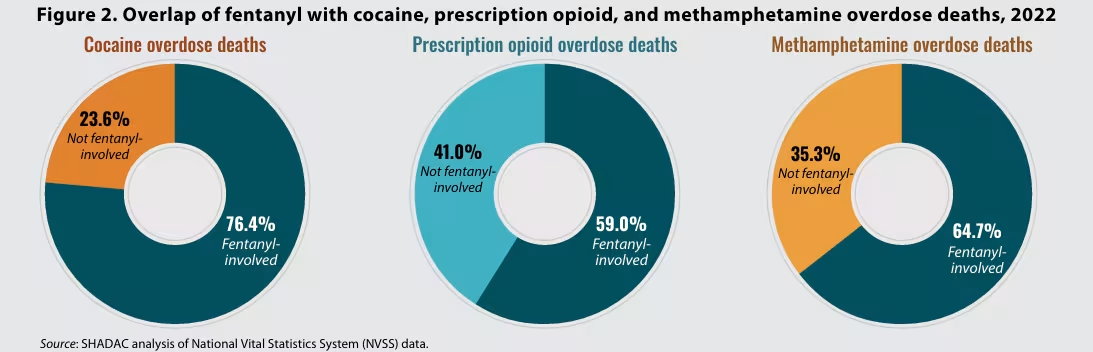
“Not only has fentanyl become the dominant substance driving today’s crisis of drug overdose deaths,” study author and Senior Research Fellow Colin Planalp says, “but it has also become the center of gravity around which other drugs orbit.”
The Opioid Epidemic Continues to Evolve
Regardless of the origin of opioids, whether heroin made from opium poppy grown by drug traffickers or fentanyl made in modern lab facilities by a pharmaceutic company, these are powerful drugs with the potential for harm. The rise of prescription opioids in the 1990s initiated what became a deadly drug epidemic, evolving to impact thousands of lives every year.
Even with increased regulation of prescription opioids, the rise of extremely potent synthetic opioids like fentanyl has caused this crisis to evolve once again. Between 2019 and 2022, U.S. fentanyl overdose death rates increased by 99%, fatal cocaine overdoses that also involved fentanyl increased by 98%, and the rate of fatal methamphetamine overdoses that also involved fentanyl increased 276%.[2]
As the opioid crisis continues to evolve, it is crucial to understand the basics of these drugs; understanding their history, chemistry, potency, and interaction in the body is essential for designing and implementing effective policy interventions, treatment methods, research studies, and more.
If you feel like you have these basics down, we encourage you to continue learning about this topic with the following briefs and resources from SHADAC:
- Issue Brief: Changing Dynamics in the Opioid Crisis Since the COVID-19 Pandemic
- Resource Page: Opioid Epidemic in the United States
- Explore Opioid and Overdose Data on State Health Compare
References
[2] https://shadac-pdf-files.s3.us-east-2.amazonaws.com/s3fs-public/2025-01/2024%20Opioid%20Brief_FINAL_0.pdf
[3] https://publichealth.jhu.edu/2024/nearly-one-third-of-us-adults-know-someone-whos-died-of-drug-overdose