
The latest Minnesota Health Access Survey (MNHA) shows that 12.3% of insured Minnesotans are worried about losing health insurance coverage in 2025, a statistically significant increase from 7.7% in 2023. The uninsured rate also rose in 2025 for the first time since 2017, reaching 5.8% after an all-time low of 3.8% in 2023.
Understanding why people with insurance coverage are increasingly worried about keeping it is essential. Research has shown that people who fear losing coverage may be more likely to delay needed care, experience greater financial strain, or stay in a job primarily to keep their insurance.
Worrying about the potential health and financial impacts of coverage loss also takes an important psychological toll. Qualitative research with young adults facing the “coverage cliff” at age 26 (when employers stop allowing parents to cover their children as dependents) talk about the “dread” that this transition brings. Focus groups with Medicaid enrollees also cite high levels of anxiety about losing coverage for themselves or their children in the face of federal policy changes. Identifying who is concerned, why, and how these patterns have shifted over time is critical for interpreting the implications of rising coverage insecurity.
This blog examines how worries about coverage loss have changed in Minnesota over time, how experiences differ for people with public, individually purchased, or group (employer‑sponsored) insurance, and the reasons respondents give for their concerns.
Concerns About Coverage Loss Over Time
The period from 2019 to 2025 has been marked by substantial volatility in U.S. health policy. This included major federal investments to stabilize health coverage and the economy during the COVID‑19 pandemic. A key provision was the implementation of a “continuous coverage” requirement in Medicaid that prohibited states from disenrolling most beneficiaries during the federal Public Health Emergency (PHE).
This policy led to significant increases in Medicaid enrollment nationally and in Minnesota. MNHA data show that the share of Minnesotans with public coverage (which includes Medicare, Medical Assistance (MA), MinnesotaCare, and Veterans Affairs (VA)) increased from 37.5% in 2019 to 44.1% in 2023.
Beginning April 2023, Congress ended the continuous coverage requirement and directed states to resume full eligibility redeterminations, a process widely referred to as the Medicaid “unwinding.” States began disenrolling individuals who were no longer eligible or who did not complete required renewal paperwork. In Minnesota, most unwinding activity was completed by mid-2024, and data from the MNHA show that the share of Minnesotans with public coverage declined from 44.1% in 2023 to 39.6% in 2025, a shift driven primarily, though not entirely, by the unwinding.
Given these major federal policy shifts and changes in the overall coverage landscape, we examined how Minnesotans’ concerns about losing coverage changed over this time period.
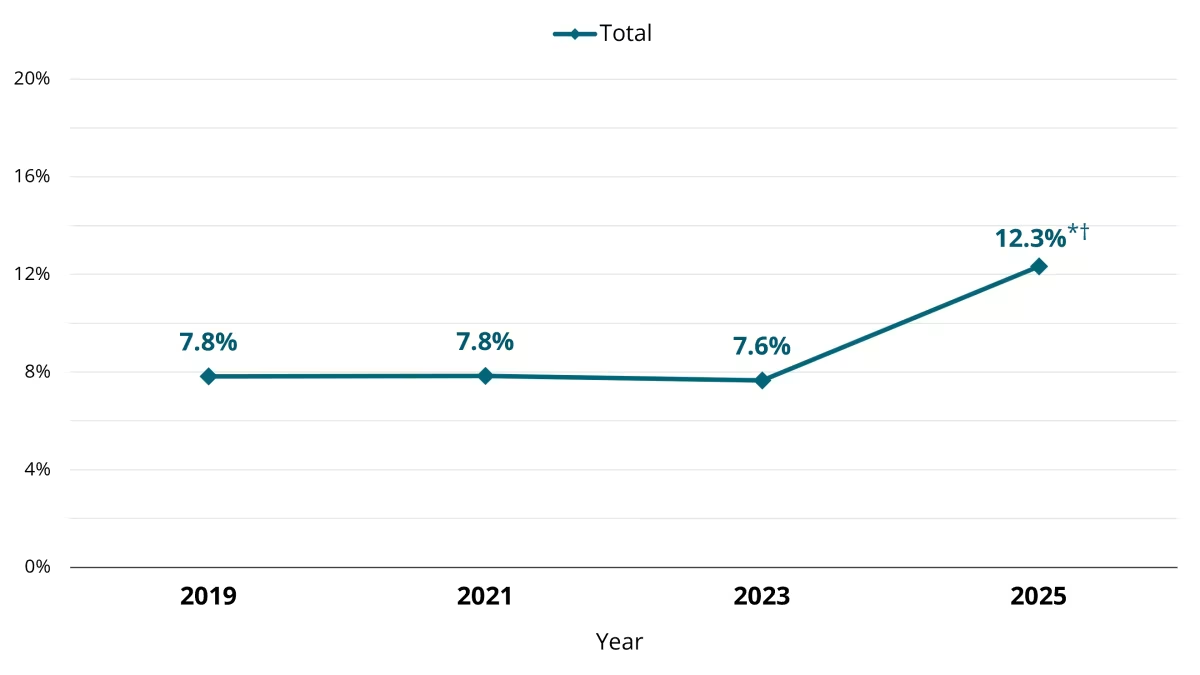
The MNHA asks respondents with health insurance, “Are you concerned that you may not have coverage at some point in the next twelve months?”. Figure 1 shows the share of all Minnesotans who reported being worried about losing their coverage from 2019 to 2025. Minnesotans’ concerns remained relatively stable at around 8% from 2019 through 2023, but increased sharply to 12.3% in 2025.
Figure 1. Share of Minnesotans With Health Insurance Who Are Concerned About Losing It in the Next Twelve Months, 2019–2025
Source: SHADAC analysis of MNHA data.
*Statistically significant difference from prior data year
†Statistically significant difference from 2019
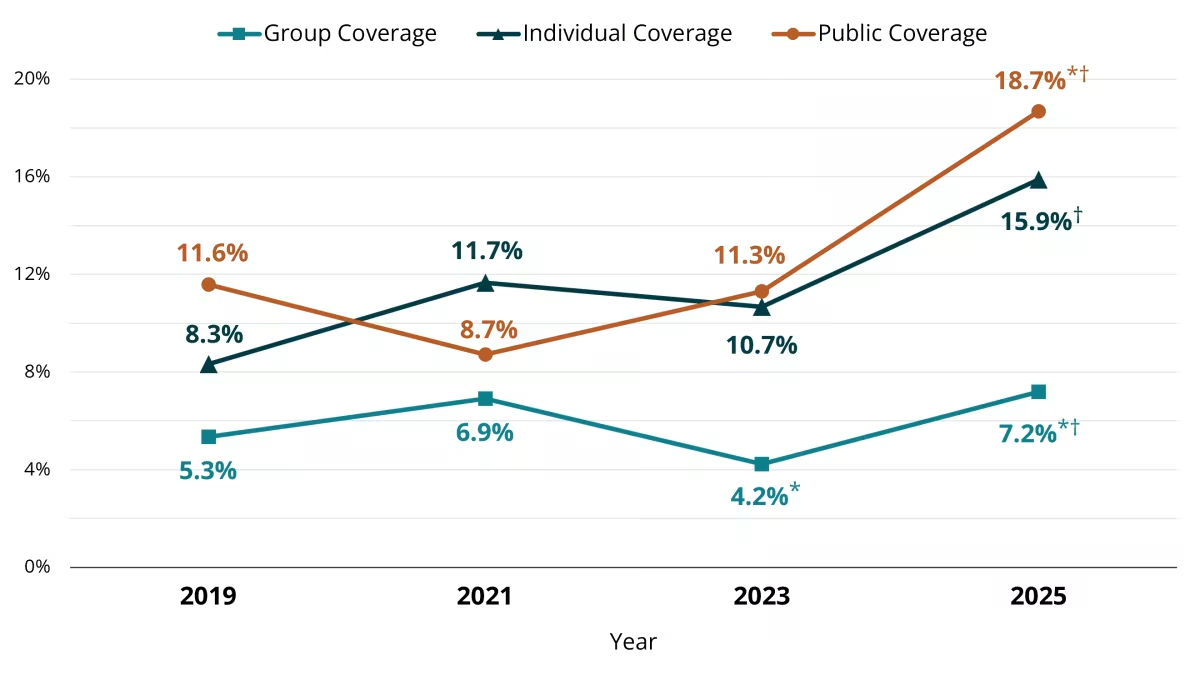
A central question is whether people with different types of coverage feel more or less concerned about losing their health insurance. When we break the data out by coverage type, distinct differences emerge (Figure 2).
Among people with group (employer-sponsored) coverage, the share who reported being worried about losing it declined to 4.6% between 2021 and 2023, then rose to 7.2% in 2025.
Figure 2. Share of Minnesotans With Health Insurance Who Are Concerned About Losing It in the Next Twelve Months by Coverage Type, 2019–2025
Source: SHADAC analysis of MNHA data.
*Statistically significant difference from prior year
†Statistically significant difference from 2019
For Minnesotans with individual coverage, concerns increased more substantially—nearly doubling from 8.3% in 2019 to 15.9% in 2025. Similarly, the share of people with public coverage who were worried about losing it increased from 11.6% to 18.7% over the same period.
These differences by coverage type reflect the policy environment in 2025: People with individual coverage were learning that premiums were expected to rise if Congress allowed the enhanced premium tax credits to expire at the end of 2025, which ultimately occurred. Minnesotans with public coverage were hearing about changes to the Medicaid program affecting eligibility and enrollment in the tax legislation known as H.R. 1, which may have heightened concerns about the stability of their coverage.
Reasons for Concern About Losing Health Insurance Differ by Coverage Type
The MNHA also asks people who are worried about losing health insurance coverage to identify the main reason for their concern. People can choose from the following reasons:
- Job loss: Job that provides coverage could end
- Employer stops offering: Employer may stop offering coverage
- Too expensive: I will no longer be able to afford coverage
- Loss of eligibility: I may no longer qualify for current insurance
- Family changes: My family situation could change (divorce, separation, etc.)
Respondents can also provide an “other” write-in response. Common write-ins in 2025 included:
- General uncertainty
- Government changes
- Government problems
- Political environment
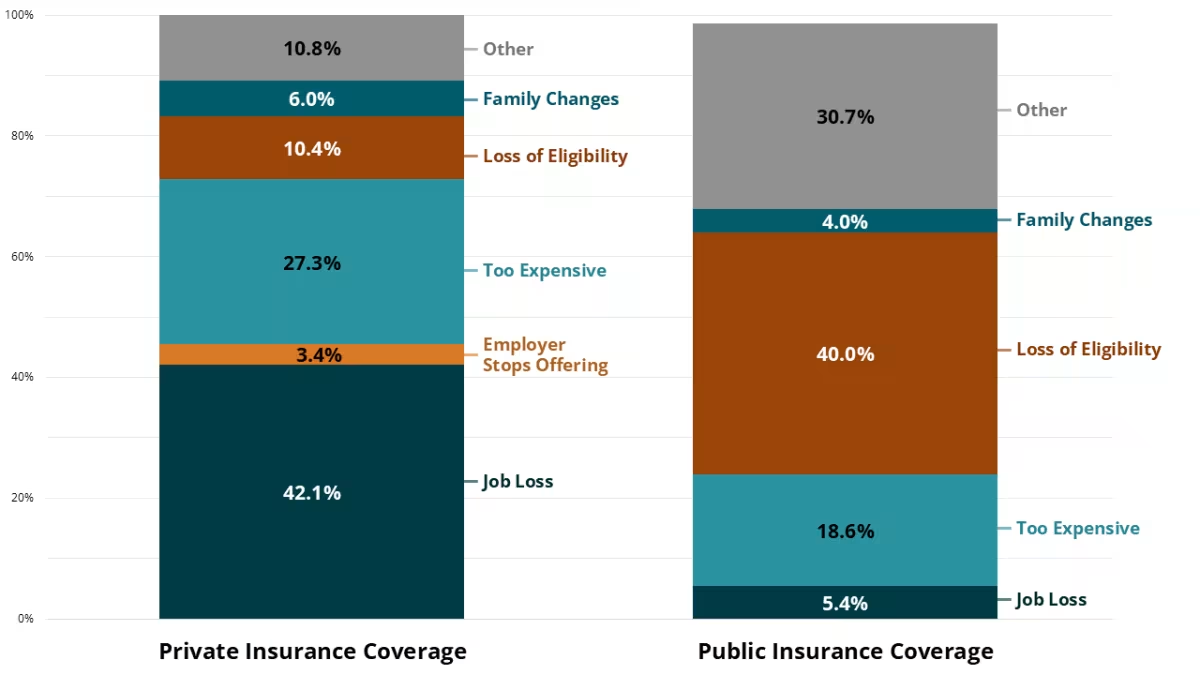
Figure 3 below shows the reasons that people reported being worried about losing health insurance coverage in 2025, separately for those with private coverage (group or individual) and those with public coverage.*
Figure 3. Reasons for Concern About Losing Health Insurance in the Next Twelve Months by Coverage Type, 2025
Source: SHADAC analysis of MNHA data.
Among people with private coverage, which includes both group and individual coverage, the most common reason for concern is job loss (42.1%), followed by a worry that coverage could become too expensive (27.3%). Among people with public coverage, the most commonly cited reason was losing eligibility (40%), followed by “other reasons” (30.7%).
These results show that people’s reasons for worrying about losing insurance reflect the specific pressures they face related to their coverage. For those with public coverage, eligibility concerns dominate, while people with private coverage are more focused on employment stability and affordability.
Conclusion
Minnesotans’ worries about losing health insurance coverage rose sharply in 2025, and these concerns are concentrated among people with individual and public coverage—groups most directly affected by recent federal policy changes and market uncertainty.
This shift matters for several reasons. Firstly, coverage insecurity can lead people to delay or forgo needed care, increasing the risk of avoidable illness and higher long‑term costs. It can also create financial instability, as households struggle to plan for medical expenses or brace for potential gaps in coverage. For employers, rising concern, especially among workers with group coverage, may influence job retention, with some employees staying in positions primarily to keep their insurance. This could also impact the risk pool and overall costs, with people who are sicker (meaning higher costs) being more likely to stay in a job for health coverage.
These findings underscore the importance of monitoring not only whether Minnesotans have coverage, but whether they feel confident they can keep it. As policymakers and stakeholders evaluate the effects of recent changes to the federal Marketplace tax credit changes, changes to the Medicaid program, and broader market dynamics, understanding the drivers of coverage insecurity will be essential for protecting access to care and maintaining a stable, equitable health coverage landscape in the state.
About the Data: Minnesota Health Access Survey
The Minnesota Health Access Survey is a biennial state-based population survey that collects information on Minnesotans’ health insurance coverage and health care access. The survey measures how many people in Minnesota have health insurance and how easy it is for them to get health care.
The Minnesota Health Access Survey is conducted as a partnership between the Minnesota Department of Health (MDH) and SHADAC, which is part of the Health Policy & Management Division of the School of Public Health at the University of Minnesota. The survey had responses from more the 16,000 Minnesotans across the state and was conducted between September and December 2025.
*Note: For the analysis of respondents’ main concerns related to coverage loss, group and individual insurance coverage were combined as “private coverage” because there was not sufficient sample to look at individual separately.