
Background on Young Adult and Teen Health Considerations
Young adult and teen health are distinct from both infant or child health and other adult health. Moving toward and into adulthood brings new social pressures and expectations, as well as responses to them, that can affect people’s health. Teens and young adults also begin interacting in new ways with the health system and with growing independence.
Adolescence can be a key stage for receiving early intervention, support, and treatment for mental health challenges, substance use disorders, chronic conditions, and more; those who do receive early interventions often have reduced symptoms and overall improved long-term health outcomes.
While the effectiveness and benefits of early and consistent health care for adolescents and young adults is generally known, accessing health care isn’t always easy or affordable for this group.
Once out of adolescence and considered young adults (age 19-25), individuals must continue to navigate the complex health care system in the US, often with fewer programs and supports for those older than 18. For example, reaching adulthood may mean aging out of foster care or losing Medicaid and CHIP eligibility or coverage. This can be complicated by financial struggles, with young adults experiencing poverty at higher rates than older adults (particularly among those 18-24), and only 16% of young adults age 18-24 indicating they are completely financially independent from their parents.
Young adults have high rates of uninsurance compared to other age groups (including three times higher than the uninsured rate for children), paired with the lowest rate of access to employer-sponsored insurance (ESI). These can combine to make accessing health care more difficult and costly, especially when also facing the financial struggles mentioned earlier. All of these factors together can lead to gaps in care.
The Study
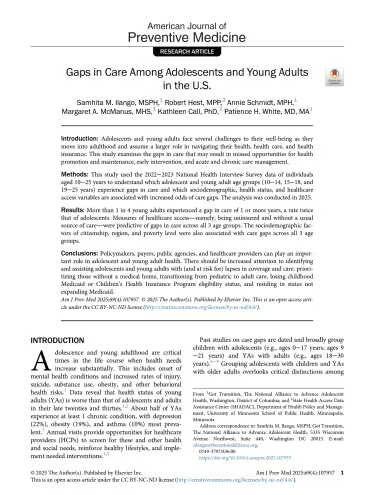
This issue of gaps in care for adolescents and young adults was the focus of a recent research study by SHADAC Research Fellow Robert Hest, SHADAC co-founder Kathleen Call, and co-authors Samhita Ilango, Annie Schmidt, Margaret McManus, and Patience White published in the American Journal of Preventive Medicine.
Using 2022-2023 National Health Interview Survey data, the research team sought to understand:
- How many adolescents and/or young adults experienced a gap in health care of one or more years
- What health care access measures (e.g., insurance coverage, usual source of care, etc.) might be associated with gaps in care
- What sociodemographic factors (e.g., poverty level, region/location, etc.) might be associated with gaps in care
Just some of the results from this study found that:
- Young adults experienced a gap in care of at least a year at two times the rate of adolescents
- Being uninsured was predictive of gaps in care for all age groups measured (10-14, 15-18, and 19-25)
Read the full study here to learn more about these and additional results along with a discussion of findings and implications for policymakers, health care providers, and public agencies.