
This post is a part of our Survey Data Season series where we examine data from various surveys that are released annually from the summer through early fall. Find all of the Survey Data Season series posts on our Survey Data Season 2026 page here.
As the name suggests, employer-sponsored insurance (ESI) is health insurance coverage offered by employers to eligible employees, with coverage options for employee spouses and families.
ESI has traditionally been the predominant form of health insurance coverage in the U.S., with a majority of the non-elderly population—61.7% or around 170 million people—enrolling in ESI coverage through their own job or a family member’s in 2024.
SHADAC has tracked trends in ESI health insurance costs for years using the latest Medical Expenditure Panel Survey–Insurance Component (MEPS-IC) data. We are continuing our coverage with this analysis of recently released 2025 MEPS data, finding that ESI family plan premiums grew at over twice the rate seen last year—read on for more details and findings.
2025 MEPS Data Show Premiums’ Rate of Increase Doubled for Family and Single Plans Since 2024
New MEPS-IC data for 2025 show that the average premium for families of private-sector workers enrolled in ESI increased from $24,540 to $26,281 between 2024 and 2025—an increase of 7%, which is more than double the increase seen between 2023 and 2024 (approximately 3%).
Premiums for single coverage also increased, from $8,486 to $9,025, or approximately 6% between 2024 and 2025. This is roughly 50% higher than the growth seen between 2023 and 2024 (4%).
Figure 1. Private Sector Employer-Sponsored Insurance Premiums by Plan Type, 2002–2025
More Than Half of States Saw Significant Increases in Average Premiums for Single Coverage in 2025
There were statistically significant increases in average premiums for single coverage in more than half of states (27) between 2024 and 2025, compared to significant increases in just three states between 2023 and 2024.
Figure 2 shows these state-level premium increases range from a low of $489 in Ohio to a high of $1,333 in Wisconsin. No states saw statistically significant decreases in average single‑coverage premiums between 2024 and 2025.
Figure 2. Statistically Significant Increases in Average Single Premiums, 2024 vs. 2025
Family Coverage Premiums Significantly Increase in Four Times As Many States Compared to Last Year
There were also statistically significant increases in average family premiums in 13 states from 2024 to 2025, compared to significant increases in just three states between 2023 and 2024. Figure 3 shows that the family-coverage premium increases ranged from a low of $1,741 in Iowa to a high of $4,639 in Alaska between 2024 and 2025.
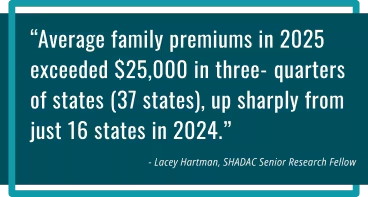
Average family premiums in 2025 exceeded $25,000 in three‑quarters of states (37 states), up sharply from just 16 states in 2024. As with single premiums, there were no statistically significant decreases in average family premiums across states between 2024 and 2025.
Figure 3. Statistically Significant Increases in Average Family Premiums, 2024 vs. 2025
Conclusion
Employer‑sponsored insurance (ESI) remains the predominant source of health coverage in the United States. Premiums for these
plans have been increasing for years, but the sharp increases nationally and in many states between 2024 and 2025 are particularly concerning.
It is important to note that premiums are just one piece of costs for ESI coverage. Other important measures include deductibles (i.e., how much people have to pay out of pocket before health insurance starts covering medical expenses), employee contributions (i.e., what share of premiums employees have to pay each month), and the share of people who are enrolled in high-deductible health plans. Future analyses will explore these and other measures related to ESI in more depth; you can explore these measures now on State Health Compare.
Data Source and Notes
Data from this analysis are from the Medical Expenditure Panel Survey–Insurance Component (MEPS‑IC), produced by the Agency for Healthcare Research and Quality (AHRQ).
All changes and differences described in this report are statistically significant at the 95% confidence level, unless otherwise specified. This analysis and linked products only pertain to employers, establishments, and employees in the private sector. Average premium prices have not been adjusted to account for variation in actuarial value.
Explore Medical Expenditure Panel Survey (MEPS) Data on State Health Compare
Data on trends in ESI premiums, deductibles, employee contribution, and high-deductible health plans starting in 2002 and running through 2025 are available on SHADAC’s State Health Compare web tool at statehealthcompare.shadac.org.
Want to learn more about health insurance terminology before diving into the data? Read our Basics Blog here for helpful health insurance term definitions.