
The National Center for Health Statistics (NCHS) has released the first health insurance coverage estimates for 2025 from the National Health Interview Survey (NHIS) as part of the NHIS Early Release Program. The rates of insurance and uninsurance captured in the report for the first half of the year—January to June 2025—are the first to be published as part of a new biannual release schedule for the NHIS and some of the first available coverage estimates for 2025 from a federal survey.^
While health insurance coverage shifted considerably overall and across demographic groups between 2023 and 2024, as noted in a previous SHADAC blog, changes in first half of 2025 were much more limited in comparison to the first half of 2024. Looking at coverage for all ages, the landscape remained statistically unchanged between these two time periods. However, changes were seen when looking at coverage rates for children and for Black individuals across different age groups. The following blog provides further detail about these shifts in health insurance coverage in the first half of 2025.
Health Insurance Coverage Held Steady for All Ages
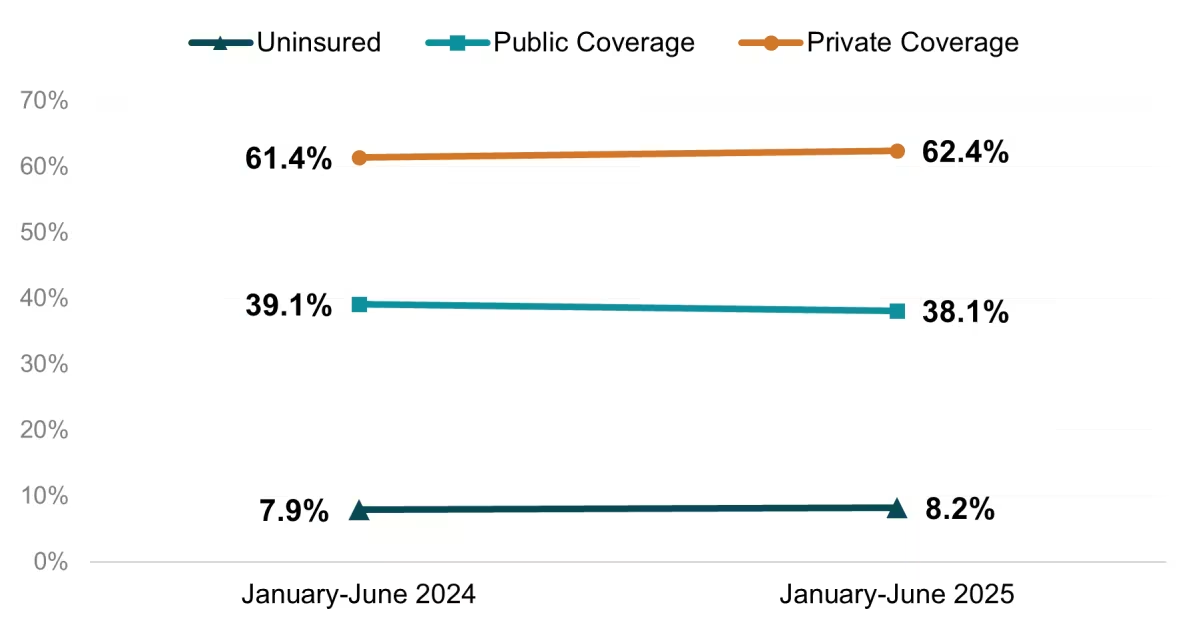
The uninsured rate as measured by the NHIS for all people was 8.2% during the first half of 2025—a rate that is statistically unchanged from 7.9% in the first half of 2024. Rates of public and private insurance coverage were also statistically unchanged between these two time periods.
Figure 1. Public Coverage, Private Coverage, and Uninsured Rates, All Ages, Jan–June 2024 to Jan–June 2025
Source: SHADAC analysis of health insurance coverage data from the 2025 and 2024 National Health Interview Survey (NHIS).
*Statistically significant change at the 95% confidence level.
Private Coverage Rates Increase Among Children
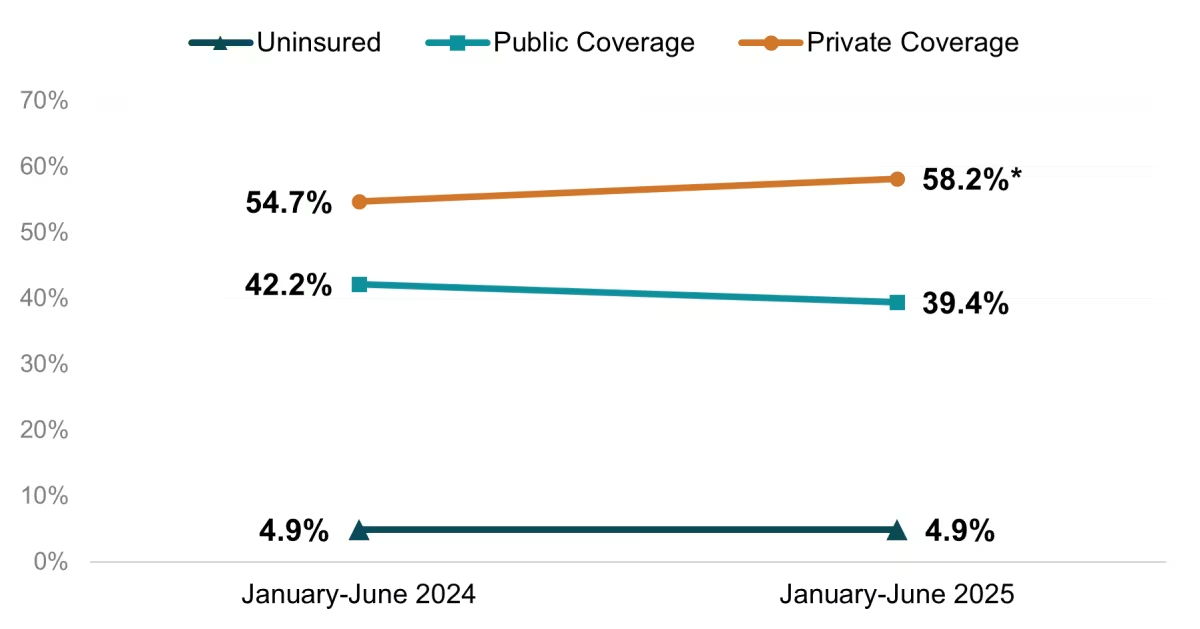
Overall, children (age 0 to 17) saw their private coverage rate rise significantly from 54.7% during January to June of 2024 to 58.2% during January to June of 2025. Public coverage and uninsurance rates were statistically unchanged for children between January to June of 2024 and January to June of 2025.
Figure 2. Public Coverage, Private Coverage, and Uninsured Rates for Children (Age 0–17), Jan–June 2024 to Jan–June 2025
Source: SHADAC analysis of health insurance coverage data from the 2025 and 2024 National Health Interview Survey (NHIS).
*Statistically significant change at the 95% confidence level.
Private Coverage Increased and Public Coverage Decreased Among Black People Under Age 65
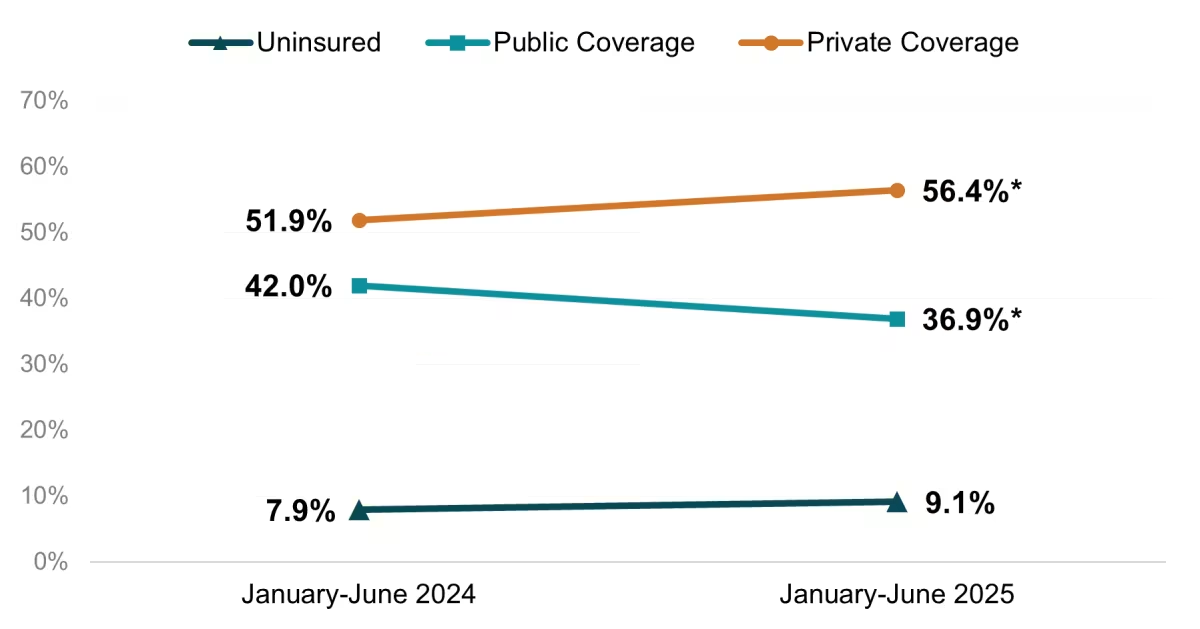
Private insurance coverage increased from 51.9% in the first half of 2024 to 56.4% in the first half of 2025 among Black people under age 65. This change appears to be driven by an increase in private coverage among Black children, where rates increased from 33.5% to 41.7% during the same time period. Private coverage among Black nonelderly adults (age 18-64), on the other hand, was statistically unchanged (58.2% in January–June 2024 and 61.5% in January–June 2025).
Black individuals under 65 also experienced a decrease in public coverage, falling from a rate of 42.0% in January–June 2024 to 36.9% in January–June 2025. The rate of uninsurance for this group was statistically unchanged, however.
Figure 3. Public Coverage, Private Coverage, and Uninsured Rates for Black Individuals Under 65 (Age 0–64), Jan–June 2024 to Jan–June 2025
Source: SHADAC analysis of health insurance coverage data from the 2025 and 2024 National Health Interview Survey (NHIS).
*Statistically significant change at the 95% confidence level.
Notes About the Estimates
All changes described compare data from the first half of 2025 to the first half of 2024 and are statistically significant at the 95% confidence level unless otherwise specified.
All category breakdowns (sex, income as a measure of poverty, race and ethnicity, and state Medicaid expansion status) are comprised of data for nonelderly individuals (age 0–64), as well as subcategories— nonelderly adults (age 18-64) and children age (0–17). Individuals 65 and older are only included in the “All Ages” findings.
The estimates provide a point-in-time measure of health insurance coverage, indicating the percent of people with that type of coverage at the time of the interview.
Related Notes and Resources
SHADAC will continue to monitor the new release schedule for the NHIS and will provide another analysis once the full-year data for 2025 are released. This is typically done as part of our Survey Data Season coverage, which tracks the health insurance coverage estimates that are released annually by five major surveys—the NHIS, the Medical Expenditure Panel Survey (MEPS), the Behavior Risk Factor Surveillance System (BRFSS), the Current Population Survey (CPS), and the American Community Survey (ACS).
For more on prior releases specific to the NHIS, see our 2024 Full-Year Health Insurance Estimates Early Release blog or our Comparing Federal Government Surveys that Count the Uninsured brief, which highlights NHIS 2024 data, but also provides important context about how and why health insurance coverage data can differ across federal surveys and offers guidance on when to use each survey.
For more on the recent changes that have been made to federal surveys and federal survey data releases, see the numerous resources that have been published as part of SHADAC’s ongoing State Alternatives for Health Data Continuity project with the Robert Wood Johnson Foundation (RWJF).
Note
^ The NHIS health insurance data from the first half of 2025 are the first coverage estimates released by a federal survey for that year and are the first in the new biannual release schedule for the NHIS. Prior to 2025, NHIS released quarterly coverage estimates (January–March, April–June, July–September, and, instead of a separate fourth quarter, full-year data). For more on changes to federal survey schedules, see our blog “The Landscape of Major Federal Health Survey Data Releases in 2025.”
Sources
Briones, E.M., & Cohen, R.A. (2026). Health insurance coverage: Early release of estimates from the National Health Interview Survey, January-June 2025. National Center for Health Statistics (NCHS). https://www.cdc.gov/nchs/data/nhis/earlyrelease/Health-Insurance-Coverage-Early-Release-of-Estimates-January-June-2025.pdf
Briones, E.M., & Cohen, R.A. (2024). Health insurance coverage: Early release of estimates from the National Health Interview Survey, January-June 2024. National Center for Health Statistics (NCHS). https://www.cdc.gov/nchs/data/nhis/earlyrelease/insur202412.pdf