
Despite Declining Rates of Fatal Drug Overdoses, Inequities Persist Among Demographic Subgroups and By Drug Type Into 2024
New Data by Education Show Disproportionate Burden on People With a High School Diploma or Less, Consistently Across All Types of Drugs
Since their rapid ascent and tragic peak during the COVID-19 pandemic, U.S. drug overdose deaths have dropped precipitously.[1] In 2024, just under 80,000 lives were lost to fatal overdoses. While still historically high, that represents a dramatic decline after more than 100,000 deaths a year in 2021, 2022, and 2023.[2]
The decline in overall drug overdose deaths has been driven primarily by a reduction in fatal overdoses involving fentanyl and related synthetic opioids, a class of drugs that has emerged as the center of gravity in the U.S. opioid epidemic in recent years.[3] Between 2022 and 2024, fatal overdoses involving fentanyl and related synthetic opioids declined from a high-water mark of nearly 74,000 to fewer than 48,000—a drop of 35%.
It is not entirely clear why drug overdose deaths have declined so quickly. One possibility is individual-level behavior changes, such as fewer people using drugs or more people using drugs in ways aimed at reducing risks, such as avoiding injection in favor of smoking as a mode of administration.[4] Another possibility is that public health interventions, such as expanding access to evidence-based treatments for opioid use disorder (OUD) and widespread distribution of the opioid overdose-reversing medication naloxone, have begun to pay dividends.[5]
Additionally, some recent research has suggested that the supply of illicitly manufactured and trafficked fentanyl has been constrained, perhaps a result of U.S. and international policymakers’ efforts to hamper supply chains for illicitly trafficked fentanyl.[6]
However, we should also recognize that the U.S. drug crisis is not remotely over. In fact, there are various signs that continued success in reducing drug overdose deaths may become increasingly difficult to achieve, as drug markets evolve, demographic patterns shift, and drug traffickers adapt. For instance, as fentanyl emerged as a growing public health threat in recent years, other non-opioid drugs—especially cocaine and methamphetamine—became intertwined in drug trafficking and the overdose crisis, killing record numbers of people, as well.[7]
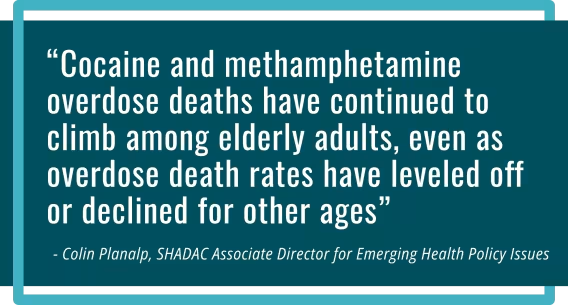
These developments appear to have contributed to new disparities in drug overdose deaths. For instance, the most recent data show that cocaine overdose deaths disproportionately kill Black people, and methamphetamine overdoses disproportionately kill American Indian or Alaska Native people. Additionally, cocaine and methamphetamine overdose deaths have continued to climb among elderly adults, even as overdose death rates have leveled off or declined for other ages.
Another issue is that there are indications that drug traffickers have been innovating in ways that could undermine recent progress. For instance, in some parts of the U.S., drug traffickers have been adding the non-opioid animal tranquilizer xylazine to fentanyl and other substances, which can cause a variety of new challenges, such as overdoses that cannot be reversed with naloxone.[8],[9],[10]Additionally, public health and law enforcement officials have raised concerns about the emergence of new kinds of illicit synthetic opioids, including nitazenes and orphines, which can be much more potent than fentanyl.[11],[12]
Important to acknowledge for this analysis is that the United States’ outdated vital statistics data infrastructure makes the identification of emerging drug threats to public health challenging to quantify—and challenging to mitigate—until they develop into full-blown crises.[13]
Using mortality data from the U.S. National Vital Statistics System, obtained through the U.S. Centers for Disease Control and Prevention’s (CDC) WONDER database, this analysis examines trends and patterns in fatal drug overdoses. It provides an overview of how drug overdose death patterns vary by demographic subgroups, and how these have changed since 2022.
We have also written two additional blogs that accompany this analysis: one providing an overview of U.S.-level trends since 2011, when the CDC first declared a drug overdose “epidemic,” and another analyzing variation in overdose deaths across the states.
Variation and Trends in Drug Overdose Deaths by Demographic Subgroups in 2024
The CDC makes drug overdose deaths data available by certain demographic characteristics. It publishes drug overdose death rates by age and race/ethnicity subgroups, and it publishes drug overdose death counts by education level.[14]
We analyzed data by age and by race/ethnicity similarly to how we analyzed data across states—by using rates and testing for statistical significance in differences. Because data by education level are published only as counts rather than rates, we used a different approach for that analysis, using what is called a proportionality index; we briefly describe this method and how to interpret results in the “Overdose Proportionality by Education” section.
Overdose Death Rates by Age
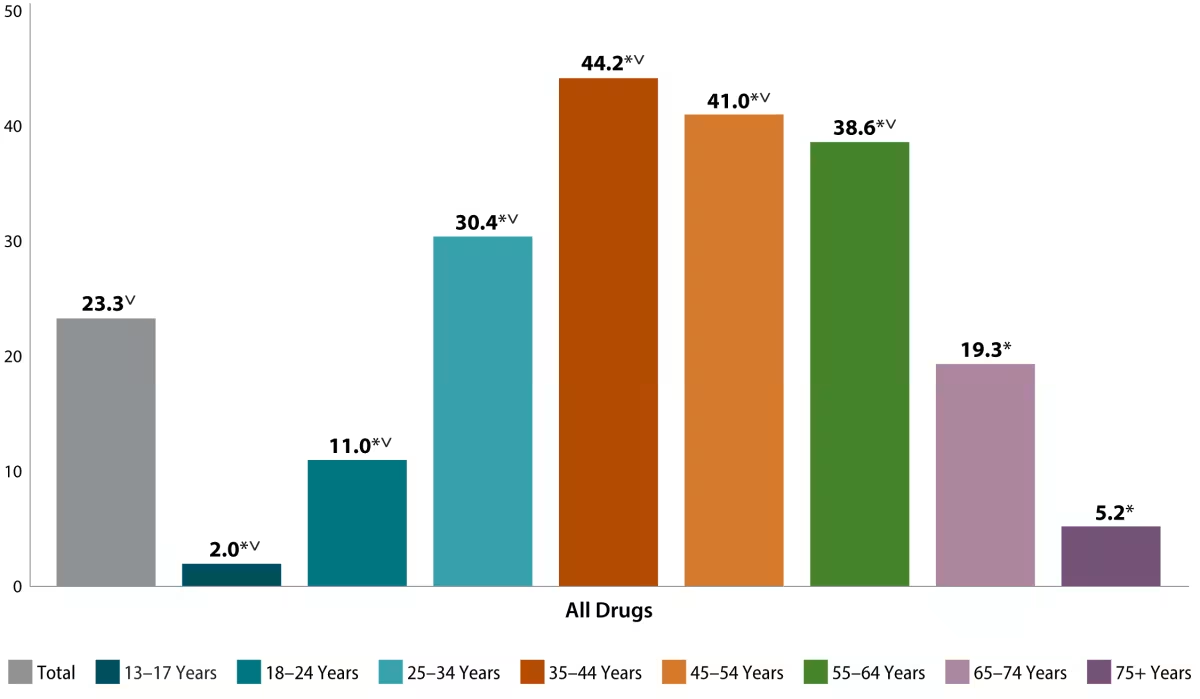
In examining overdose death rates for all drugs by age, the data show that rates declined significantly between 2022 and 2024 among adolescents (age 13–17 years old) and working-age adults (age groups 18–24, 25–34, 35–44, 45–54, and 55–64 years old) (Figure 1).
Rates did not decline significantly among elderly adults age 65–74 or age 75 and older. No age subgroup saw a statistically significant increase in overdose deaths from all drugs.
Figure 1. Overdose Death Rates from All Drugs by Age, 2024
Source: SHADAC analysis of National Vital Statistics System (NVSS) data.
^ Rate significantly higher than 2022 rate at 95% level.
˅ Rate significantly lower than 2022 rate at 95% level.
* Rate significantly different from total rate at 95% level.
Adolescents had the lowest drug overdose death rate in 2024, at 2.0 deaths per 100,000 people, followed by the oldest adults, age 75 and older, at 5.2 deaths per 100,000 people. Like those groups, young adults (age 18–24) also had an overdose death rate significantly lower than the overall population, at 11.0 deaths per 100,000 people, as did elderly adults age 65–74, at 19.3 deaths per 100,000 people.
Adults age 35–44 had the highest overdose death rate for all drugs, at 44.2 deaths per 100,000 people, which was significantly higher than the overall population. Adults age 25–34, 45–54, and 55–64 also had overdose death rates for all drugs that were significantly higher than the overall population.
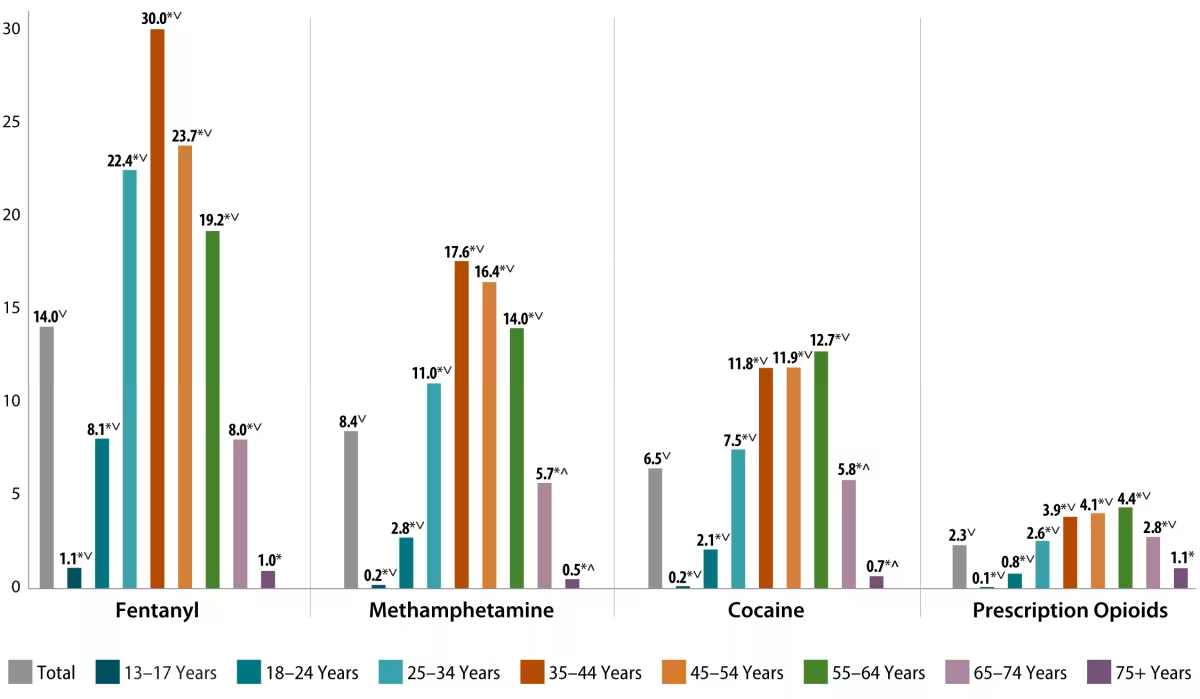
The patterns and changes over time by age subgroup were similar for fentanyl and prescription opioid overdose death rates, seeing significant declines among most age subgroups between 2022 and 2024, along with significantly higher rates among working-age adults compared to the overall population (Figure 2). For both cocaine and methamphetamine, overdose death rates were again higher among working-age adults compared to the overall population.
While cocaine and methamphetamine overdose death rates declined among adolescents and non-elderly adults (i.e., adults younger than 65), they did increase significantly among elderly adults (age 65–74 and 75 and older).
Figure 2. Drug Overdose Death Rates by Age, 2024
Source: SHADAC analysis of National Vital Statistics System (NVSS) data.
^ Rate significantly higher than 2022 rate at 95% level.
˅ Rate significantly lower than 2022 rate at 95% level.
* Rate significantly different from total rate at 95% level.
Overdose Death Rates by Race/Ethnicity
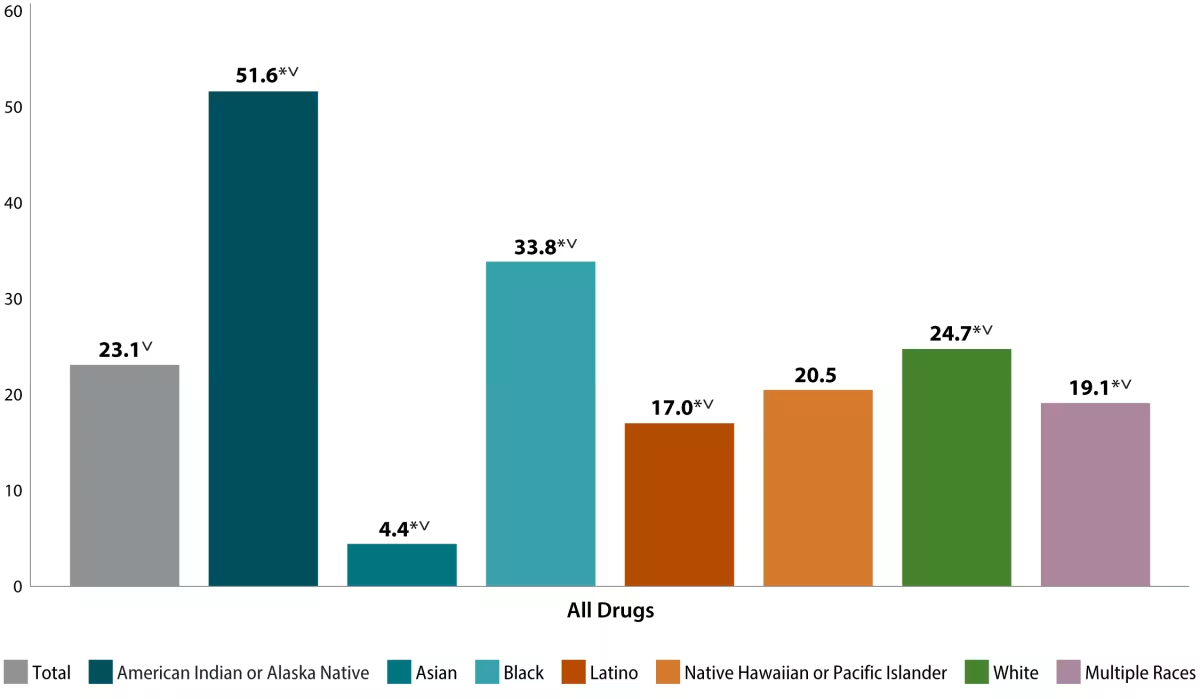
By racial and ethnic groups, overdose death rates for all drugs fell almost across the board—declining among American Indian or Alaska Native, Asian, Black, Latino, White, and people of multiple races (Figure 3). No subgroup saw its overdose rate for all drugs increase significantly, and only Native Hawaiian or Pacific Islander people experienced no statistically significant change.
Compared to the overall population rate, American Indian or Alaska Native, Black, and White people had overdose death rates for all drugs that were significantly higher, while Asian, Latino, and people of multiple races had rates that were significantly lower. The rate for Native Hawaiian or Pacific Islander people was not significantly different from the total population rate of overdose deaths for all drugs.
Figure 3. Overdose Death Rates from All Drugs by Race/Ethnicity, 2024
Source: SHADAC analysis of National Vital Statistics System (NVSS) data.
^ Rate significantly higher than 2022 rate at 95% level.
˅ Rate significantly lower than 2022 rate at 95% level.
* Rate significantly different from total rate at 95% level.
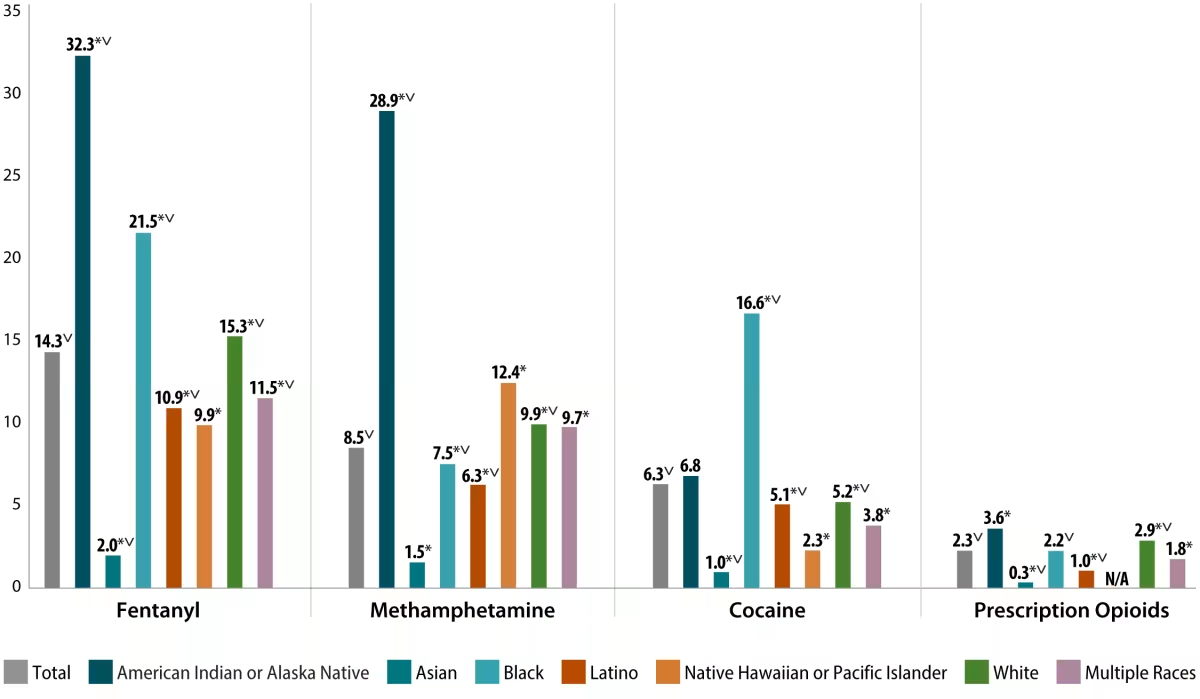
For fentanyl, all racial and ethnic subgroups saw significant declines in their overdose death rates between 2022 and 2024, with the exception of Native Hawaiian or Pacific Islander people, whose rate did not change significantly (Figure 4). With a rate more than twice that of the overall population, American Indian or Alaska Native people had the highest fentanyl overdose death rate, followed by Black and White people—each of which were significantly higher than the overall population. Other subgroups had fentanyl overdose death rates lower or not significantly different from the overall population.
Figure 4. Drug Overdose Death Rates by Race/Ethnicity, 2024
Source: SHADAC analysis of National Vital Statistics System (NVSS) data.
^ Rate significantly higher than 2022 rate at 95% level.
˅ Rate significantly lower than 2022 rate at 95% level.
* Rate significantly different from total rate at 95% level.
For prescription opioids, Asian, Black, Latino, and White people saw significant declines in their overdose death rates between 2022 and 2024, while those for American Indian or Alaska Native people and people of multiple races did not see their rate change significantly. Significance testing was not possible for Native Hawaiian or Pacific Islander people as a result of suppression of data by the CDC due to small numbers of deaths in 2022 and 2024. American Indian or Alaska Native and White people had rates of prescription opioid overdose deaths that were significantly higher than the overall population. Other subgroups for which testing was possible had prescription opioid overdose death rates lower or not significantly different from the overall population.
For cocaine, Asian, Black, Latino, and White people saw significant declines in their overdose death rates between 2022 and 2024, while rates for American Indian or Alaska Native, and people of multiple races did not change significantly. Testing was not possible for Native Hawaiian or Pacific Islander people, as the 2022 rate for this group was suppressed due to small numbers of deaths. With a rate nearly triple that of the overall population, Black people were the only subgroup with a cocaine overdose death rate that was significantly higher than the overall population. Other subgroups had rates that were significantly lower or not significantly different from the overall population.
For methamphetamine, American Indian or Alaska Native, Black, Latino, and White people saw significant declines in their overdose death rates between 2022 and 2024, while the rates for Asian, Native Hawaiian or Pacific Islander, and people of multiple races did not change significantly. With a rate more than triple that of the overall population, American Indian or Alaska Native people had the highest rate of methamphetamine overdose deaths, followed by Native Hawaiian or Pacific Islander, White, and people of multiple races—each of which were significantly higher than the overall population. Other subgroups had rates that were significantly lower than the overall population.
Overdose Proportionality by Education
As we mentioned earlier, the CDC does not publish drug overdose death rates by education, but it has published counts of deaths by education level since 2021.[15] ,[16] As such, we analyzed these data using a proportionality index methodology to estimate whether certain demographic subgroups—in this case, different levels of educational attainment—are disproportionately impacted by drug overdose deaths.[17]
In our analysis using this methodology, we compared the distribution of drug overdose deaths across education levels against the distribution of the U.S. population across those same education levels. The proportionality index approach assumes that if drug overdoses occurred at random, they would be distributed evenly across people of different education levels in proportion to their share of the total population.[18] So, if the proportionality index shows that drug overdose deaths are not distributed evenly across educational levels, that indicates disparities—or a disproportionate burden for some subgroups.
We calculated an index value for each educational subgroup—less than high school, high school or GED, some college, associate degree, bachelor’s degree, and advanced degree (e.g., a master’s, doctoral, law, or medical degree). In interpreting the results for each subgroup, an index value of 1.0 indicates that the prevalence of drug overdose deaths is approximately equal to what one would expect if drug overdose deaths were distributed proportionately across the population. A value higher or lower than 1.0 represents a disparity; for example, a value of 1.5 means a subgroup’s share of overdose deaths is 50% higher than one would expect if they were distributed evenly across the population (i.e., a “negative” or “bad” disparity), and a value of 0.5 means a subgroup’s share of overdose deaths is 50% lower than one would expect if they were distributed evenly across the population (i.e., a “positive” or “good” disparity).
This analysis is limited to drug overdoses for adults age 25 and older, as including children and young adults—who often have not had the time to complete common educational milestones, such as high school and college degrees—could have biased the results toward lower levels of education.[19]
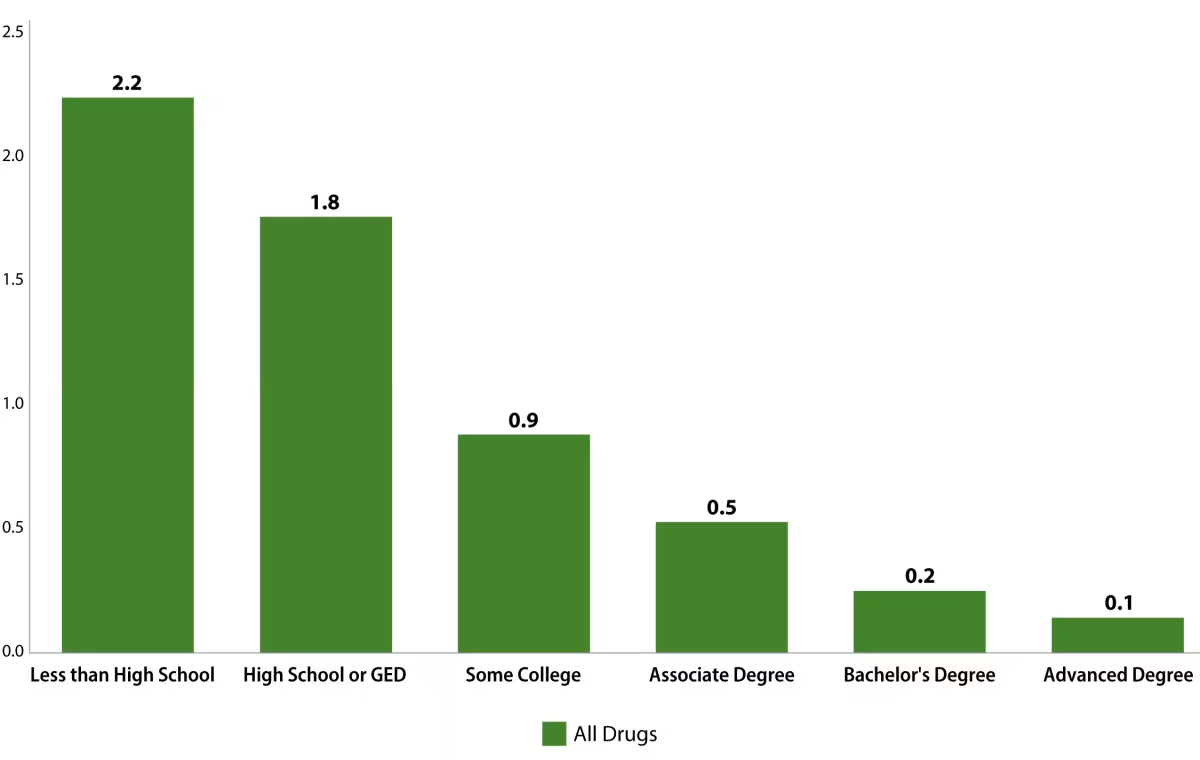
For overdose deaths involving all drugs by education level, we see clear and substantial disparities. Drug overdose deaths were disproportionately higher among people with less than a high school diploma or with a high school diploma or GED, with proportionality indices of 2.2 and 1.8, respectively (Figure 5). This means that fatal overdoses involving all drugs were roughly twice as common for these people as one would expect if fatal overdoses were distributed evenly across the population.
With a proportionality index of 0.9, the share of fatal drug overdoses for people with some college was close to what one would expect if they were equally distributed across the population. But with proportionality indices of 0.5 or smaller, fatal drug overdoses were much less common among people with an associate degree, a bachelor’s degree, or an advanced degree (e.g., a master’s, doctoral, law, or medical degree) than one would expect if they were evenly distributed across the population.
Figure 5. Overdose Death Proportionality Indices from All Drugs by Education, 2024
Source: SHADAC analysis of National Vital Statistics System (NVSS) data.
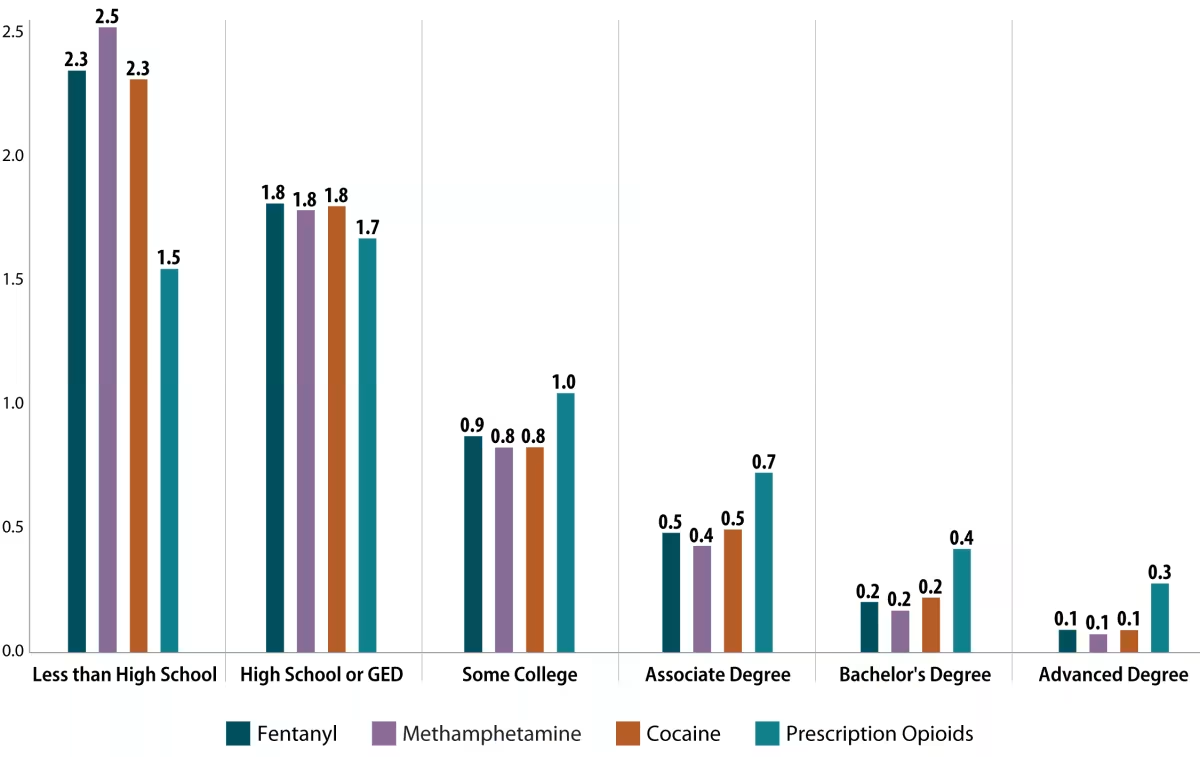
The pattern of disproportionate impacts of fatal drug overdoses on people with lower educational attainment was consistent within specific drug types, particularly fentanyl and other synthetic opioids, methamphetamine and other psychostimulants, and cocaine (Figure 6).
The pattern was also similar for prescription opioid painkillers, though it was less pronounced; while people with lower levels of education experienced disproportionately more prescription opioid overdose deaths, and people with higher levels of education experienced disproportionately fewer prescription opioid overdose deaths, the difference was less extreme than for other drug categories.
Figure 6. Drug Overdose Death Proportionality Indices by Education, 2024
Source: SHADAC analysis of National Vital Statistics System (NVSS) data.
Conclusion and Discussion
The U.S. marked a milestone in 2024, with the largest decline in fatal drug overdoses in the past quarter-century, as well as the first time they have dropped for two consecutive years. These developments should be encouraging, as they demonstrate that progress is possible in the effort to turn the tide and save lives.
However, we should be cautious not to declare victory just yet, as the 2024 drug overdose death toll of more than 79,000 lost lives remains historically high—it is, in fact, higher than any time before their spike during the COVID-19 pandemic. We still have far to go before the U.S. drives overdose deaths down to the levels seen before the opioid epidemic began in the late 1990s and early 2000s.
Analysis of drug overdose deaths data by demographic subgroups illuminate the disproportionate burden of the overdose crisis and the importance for focused interventions. For instance, our analysis found that cocaine and methamphetamine overdoses continued to climb among elderly adults, age 65–74 and 75 and older—the only age groups to see increased fatal overdose rates across all the drug types we examined. We also found dramatic disparities in fentanyl and methamphetamine overdose death rates for American Indian or Alaska Native people, and in cocaine overdose death rates for Black people, which represent a continuation of the longstanding trend we have documented in prior years.[20],[21],[22]
Additionally, new data on drug overdose deaths by education level allowed us to examine the overdose crisis through a new lens.
These data quantify a severely disproportionate burden of higher drug overdose deaths among people with lower levels of education, particularly those with less than a high school diploma or those with a high school diploma or GED. Overdose deaths for all drugs for these groups were roughly twice as common as would be expected if drug overdose deaths were distributed evenly across the population. The pattern was nearly identical for fentanyl, methamphetamine, and cocaine, and the disproportionate burden for people with lower levels of education was only slightly less pronounced for prescription opioids.
Given the close association between education level and income in the U.S., these results are consistent with research on the relationship between people’s economic circumstances and the opioid crisis. For instance, other studies have shown that people with lower incomes have a higher risk for fatal overdoses, and people with lower incomes are also more likely to lack health insurance, which can limit their access to treatment for substance use disorders.[23],[24]
These latest data on drug overdose deaths provide evidence for optimism that the crisis need not be hopeless. But the data presented in this report—combined with prior experience on the continually evolving nature of the opioid crisis, presented in precursor briefs—point to certain known threats that cannot be dismissed.[25],[26]
One such threat is that the crisis may, yet again, pivot in ways that could allow for a resurgence in overdose deaths, such as when the illicit market for opioids shifted from heroin to fentanyl. Public health and law enforcement agencies throughout the U.S. have continued to identify new and emerging illicit drugs, including novel, powerful opioids that could supplant fentanyl, as well as non-opioids that are increasingly mixed by drug traffickers into the illicit drug supply.
A second threat is that the crisis has repeatedly spread to new subpopulations that had previously been less-severely impacted by growing drug overdose deaths. For instance, the intermingling of fentanyl with cocaine in illicit drug markets triggered a spike in overdose deaths among Black people, who had been relatively insulated from rising opioid overdose death rates during the time when the opioid crisis centered largely on prescription opioid painkillers. More recently, drug overdose deaths also spiked among adolescents during the pandemic, rising to become a top cause of death for this age group.[27] And, this analysis found that overdose deaths from cocaine and methamphetamine have continued to climb among the elderly.
Together, these threats and findings underpin a need for continued diligence in tracking changes in overdose crisis trends, as well as state-level variation and differences across demographic subgroups. Though the declines in overdose deaths in 2024 are encouraging, prior experience reinforces that backsliding is possible. But continued tracking and early identification of emerging threats, along with state- and subgroup-level dynamics, can be used by policymakers, public health professionals, the health care system, and others to design and deploy tailored interventions.
While we do not know definitively what has caused the decline in overdose deaths, it is important to acknowledge the recent reversal in the trajectory of the opioid crisis. If for no other reason, noting that improvement reinforces the notion that progress is possible—that saving lives is both a laudable and achievable goal.
The fact that we still do not know why overdose death rates have fallen is concerning, though. It reinforces the idea that the U.S. invest should in research and evaluation efforts to study what has been working to change the course of the crisis, as well as what has not been working, so that policymakers can focus scarce resources on initiatives most likely to pay off by saving and improving people’s lives.
To dive deeper into the latest overdose deaths data, read the two blogs that accompany this analysis:
References
[1] State Health Access Data Assistance Center (SHADAC). (2026). Opioid-related and other drug poisoning deaths per 100,000 people. State Health Compare. https://statehealthcompare.shadac.org/trend/197/opioidrelated-and-other-drug-poisoning-deaths-per-100000-people-by-drug-type#0/1/162/21,19,20,9,10,11,12,13,14,1,2,3,4,5,6,7,8,15,24,25,27,32,37,42,76/233
[2] National Center for Health Statistics. (2026, June 9). Mortality Data on CDC WONDER. Centers for Disease Control and Prevention (CDC) WONDER. https://wonder.cdc.gov/mcd.html
[3] Planalp, C., & Stewart, A. (2024, October). Changing Dynamics in the Opioid Crisis Since the COVID-19 Pandemic. State Health Access Data Assistance Center (SHADAC). https://shadac-pdf-files.s3.us-east-2.amazonaws.com/s3fs-public/2026-03/2024%20Opioid%20Brief_FINAL_0.pdf
[4] Dowell, D., Nataraj, N., Rikard, M., Park, J., Zhang, K., & Baldwin, G. (2025). Why have overdose deaths decreased? Widespread fentanyl saturation and decreased drug use among key drivers. The Lancet Regional Health – Americas, 51, 101226. https://doi.org/10.1016/j.lana.2025.101226
[5] Dowell, D., Nataraj, N., Rikard, M., Park, J., Zhang, K., & Baldwin, G. (2025). Why have overdose deaths decreased? Widespread fentanyl saturation and decreased drug use among key drivers. The Lancet Regional Health – Americas, 51, 101226. https://doi.org/10.1016/j.lana.2025.101226
[6] Vangelov, K., Humphreys, K., Caulkins, J.P., Pollack, H., Pardo, B., & Reuter, P. (2026). Did the illicit fentanyl trade experience a supply shock? Science, 391(6781), 134-136. https://doi.org/10.1126/science.aea6130
[7] Planalp, C., & Stewart, A. (2024, October). Changing Dynamics in the Opioid Crisis Since the COVID-19 Pandemic. State Health Access Data Assistance Center (SHADAC). https://shadac-pdf-files.s3.us-east-2.amazonaws.com/s3fs-public/2026-03/2024%20Opioid%20Brief_FINAL_0.pdf
[8] National Institute on Drug Abuse. (2024, September). Xylazine. National Institutes of Health. https://nida.nih.gov/research-topics/xylazine
[9] United States Drug Enforcement Administration (DEA). (n.d.). Public Safety Alert: DEA Reports Widespread Threat of Fentanyl Mixed with Xylazine. U.S. Department of Justice. https://www.dea.gov/alert/dea-reports-widespread-threat-fentanyl-mixed-xylazine
[10] Kariisa, M., O’Donnell, J., Kumar, S., Mattson, C.L., & Goldberger, B.A. (2023, June 30). Illicitly Manufactured Fentanyl–Involved Overdose Deaths with Detected Xylazine — United States, January 2019–June 2022. Morbidity and Mortality Weekly Report, Centers for Disease Control and Prevention (CDC). https://www.cdc.gov/mmwr/volumes/72/wr/mm7226a4.htm
[11] DEA Washington Division. (2022, June 1). New, Dangerous Synthetic Opioid in D.C., Emerging in Tri-State Area. United States Drug Enforcement Administration (DEA), U.S. Department of Justice. https://www.dea.gov/stories/2022/2022-06/2022-06-01/new-dangerous-synthetic-opioid-dc-emerging-tri-state-area
[12] Office of Justice Programs. (2026). Increase in Fatal Overdoses Linked to Novel Synthetic Opioid N-Propionitrile Chlorphine (Cychlorphine). U.S. Department of Justice. https://www.ojp.gov/library/publications/increase-fatal-overdoses-linked-novel-synthetic-opioid-n-propionitrile
[13] Planalp, C., & Stewart, A. (2024, October). Changing Dynamics in the Opioid Crisis Since the COVID-19 Pandemic. State Health Access Data Assistance Center (SHADAC). https://shadac-pdf-files.s3.us-east-2.amazonaws.com/s3fs-public/2026-03/2024%20Opioid%20Brief_FINAL_0.pdf
[14] While the CDC formerly published mortality rates by level of urbanization, it has stopped making those available and now only publishes deaths data in the form of counts. The CDC only recently began publishing mortality data by education in the form of counts only.
[15] The CDC has also stopped publishing drug overdose death rates by level of urbanization and now only releases death counts by level of urbanization. We conducted a similar proportionality index analysis for those data but found relatively minor differences across level of urbanization, compared with those we found by education.
[16] While the CDC data on education level of people deceased of drug overdoses is less complete than some other variables, the levels of missing data are still relatively small. For example, missing education level ranges from 3% in 2021 to 5% in 2023 and 2024 for overdoses involving all drugs.
[17] California Community Colleges Chancellors’ Office. (2014, July 6). Guidelines for Measuring Disproportionate Impact in Equity Plans. https://www.cccco.edu/-/media/CCCCO-Website/Files/DII/guidelines-for-measuring-disproportionate-impact-in-equity-plans-tfa-ada.pdf
[18] Our analysis used estimates of the educational distribution of the U.S. population obtained from the 2022 Current Population Survey (CPS) Annual Social and Economic Supplement (ASEC).
[19] Our approach, combined with the fact that most fatal drug overdoses occur in adults 25 and older, mitigates the possibility that age of people is a driving factor in drug overdose disparities by education level.
[20] Planalp, C., & Hest, R. (2020, August). Overdose Crisis in Transition: Changing National Trends in a Widening Drug Death Epidemic. State Health Access Data Assistance Center (SHADAC). https://shadac-pdf-files.s3.us-east-2.amazonaws.com/s3fs-public/publications/2020%20NATIONAL_SHADAC_Opioidbrief.pdf
[21] Planalp, C., & Steward, A. (2023, November). The Opioid Crisis in the Pandemic Era. State Health Access Data Assistance Center (SHADAC). https://shadac-pdf-files.s3.us-east-2.amazonaws.com/s3fs-public/publications/Opioid%20Crisis%20Pandemic-2023%20Brief.pdf
[22] Planalp, C., & Stewart, A. (2024, October). Changing Dynamics in the Opioid Crisis Since the COVID-19 Pandemic. State Health Access Data Assistance Center (SHADAC). https://shadac-pdf-files.s3.us-east-2.amazonaws.com/s3fs-public/2026-03/2024%20Opioid%20Brief_FINAL_0.pdf
[23] Altekruse, S.F., Cosgrove, C.M., Altekruse, W.C., Jenkins, R.A., & Blanco, C. (2020). Socioeconomic risk factors for fatal opioid overdoses in the United States: Findings from the Mortality Disparities in American Communities Study (MDAC). PLoS ONE, 15(1): e0227966. https://journals.plos.org/plosone/article?id=10.1371/journal.pone.0227966
[24] Olfson, M., Mauro, C., Wall, M.M., Choi, C.J., Barry, C.L., & Mojtabai, R. (2022). Healthcare coverage and service access for low-income adults with substance use disorders. Journal of Substance Abuse Treatment, 137(108710). https://www.sciencedirect.com/science/article/pii/S0740547221004360
[25] Planalp, C., & Steward, A. (2023, November). The Opioid Crisis in the Pandemic Era. State Health Access Data Assistance Center (SHADAC). https://shadac-pdf-files.s3.us-east-2.amazonaws.com/s3fs-public/publications/Opioid%20Crisis%20Pandemic-2023%20Brief.pdf
[26] Planalp, C., & Stewart, A. (2024, October). Changing Dynamics in the Opioid Crisis Since the COVID-19 Pandemic. State Health Access Data Assistance Center (SHADAC). https://shadac-pdf-files.s3.us-east-2.amazonaws.com/s3fs-public/2026-03/2024%20Opioid%20Brief_FINAL_0.pdf
[27] Planalp, C., & Winkelman, T. (2025, January 6). During the Pandemic, Drug Overdoses Became the Third Leading Cause of Death for U.S. Adolescents. State Health Access Data Assistance Center (SHADAC). https://www.shadac.org/news/adolescent-drug-overdose-deaths-pandemic-third-leading-cause-death